| The Two Sessions: Democracy, Development and Diplomacy of China |
| 2025-03-31 19:58:37 |
|
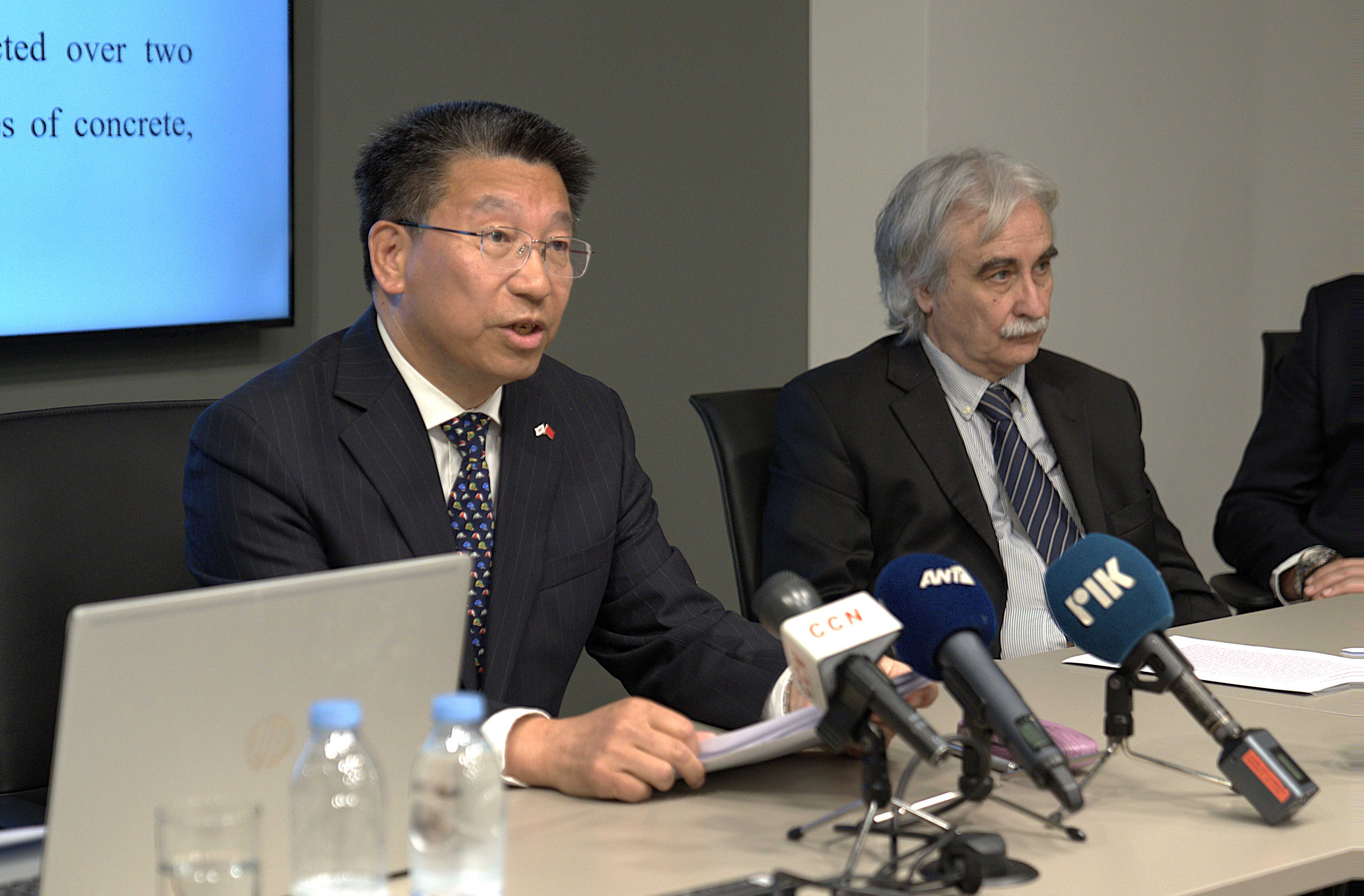
On 28 March 2025, Ambassador Liu Yantao held a seminar on the Two Sessions with political parties, thinktanks, universities and media outlets of Cyprus. The following is the full text of Ambassador Liu’s speech:
Distinguished Guests, Friends, Kalimera! It gives me great pleasure to join you at the European University Cyprus and exchange views on China-related topics. On March 11, the Two Sessions, deemed as an important window on China, were successfully concluded. They sent messages of new developments, new measures, and new opportunities about China. Here, I would like to share with you three key aspects of the Two Sessions, namely democracy, development and diplomacy, and help you understand more about China. I. The Two Sessions are a concrete example of China’s true and vibrant democracy. The Two Sessions mean the annual meetings of China’s top legislature, the National People’s Congress (NPC), and the top political advisory body, the National Committee of the Chinese People’s Political Consultative Conference (CPPCC). According to the Chinese constitution, the people’s congress system is the fundamental political system of China. The National People’s Congress, or NPC, is the highest state organ of power. Various levels of state administrative, supervision, trial and prosecution bodies are all produced by, accountable to and supervised by the people’s congress. Deputies to various levels of the people’s congress are elected by the people through democratic elections. Coming from different regions, ethnic groups and fields, they listen to and convey the opinions and demands of the people through different forms and channels, and perform their statutory duties. The system of multiparty cooperation and political consultation under the leadership of the Communist Party of China (CPC) is a basic political system of China. The Chinese People’s Political Consultative Conference, or CPPCC, comprises various political parties, organizations, and individuals from diverse ethnic groups and sectors of society who share common political foundation and united goals. CPPCC members conduct extensive political consultation and democratic oversight, and participate in the deliberation of state affairs, thereby safeguarding the overall, fundamental, and long-term interests of the overwhelming majority of people. At the just-concluded Two Sessions, over 3,000 NPC deputies and over 2,000 CPPCC members gathered in Beijing to discuss state affairs and the work of the government. During the drafting process, authors of the Government Work Report solicited nearly 4,000 pieces of feedback from localities, departments, and organizations, collected over two million online suggestions from the public, and proposed a series of concrete, livelihood-enhancing measures. During the Two Sessions, NPC deputies and CPPCC members made proposals in accordance with law, presented views and suggestions on behalf of the people, and had close interactions with the media and the public. These are all good examples of the openness, confidence and dynamism of China’s democracy. In fact, democracy is a common value of all humanity and a fundamental principle firmly upheld by the CPC and the Chinese people. Democracy manifests itself in diverse forms. To evaluate the effectiveness of a democratic system, one must not only assess how well it reflects public opinion during elections but, more importantly, examine its ability to consolidate and represent the people’s will after elections. Crucially, it must align with a nation’s specific conditions, deliver political stability, economic growth, social harmony, and better livelihoods, so as to earn the genuine support of the people. Over the past four decades of reform and opening-up, China has made remarkable achievements. Surveys by international institutions, including Harvard University, show that over 90% of the Chinese people have expressed satisfaction with the Chinese government in recent years. These facts demonstrate that China’s whole-process people’s democracy is extensive, genuine, and effective in practice, and has contributed Chinese wisdom to the advancement of human political civilization. II. The Two Sessions present the bright prospect of China’s high-quality development. First, the Chinese economy has demonstrated both stability and progress, maintaining a sustained positive trajectory. Last year, the Chinese economy expanded steadily, with its GDP reaching nearly 18 trillion euros and growing by 5%—one of the highest growth rate among the major economies. China’s contribution to global growth remained at around 30%. For 2025, the country’s economic growth target is set at around 5%. Several days ago, the 2025 Annual Meeting of the China Development Forum was held in Beijing, which was attended by over 100 representatives from international organizations and global top 500 companies. At the meeting, Premier Li Qiang emphasized that the setting of this year’s growth target is grounded in a profound understanding of China’s economic fundamentals and unwavering confidence in the nation’s governance capabilities and development potential. We will strive to achieve this target by combining stronger policy measures with the full mobilization of market forces. On one hand, we will implement more proactive and effective macro policies, further intensify counter-cyclical adjustments, and introduce new incremental policies when necessary to provide robust support for sustained economic recovery and stable growth. On the other hand, we will deepen economic structural reform, advance the development of a unified national market, address bottlenecks in economic flows, foster a more favorable environment for businesses, strengthen policy support for business innovation and entrepreneurship, and enhance the internal drivers of development. Second, China has promoted integrated advancements in technological and industrial innovation and secured multiple breakthroughs. Last year, the annual production of new energy vehicles in China surpassed 13 million units; the Chang’e-6 mission completed humanity’s first-ever sample collection from the far side of the moon; and the Mengxiang ocean drilling vessel was delivered and commissioned. This year, the animated film Ne Zha II has ranked among the top five globally in box office earnings, and DeepSeek has gained great traction. Emerging fields such as quantum technology, embodied AI, and 6G have become hot topics of the Two Sessions. The Government Work Report stressed the importance of developing new quality productive forces in light of local conditions, which demonstrates China’s strong commitment to innovation-driven development strategy. Data reveals that last year, China’s total research and development expenditure reached 450 billion US dollars, marking an 8.3% year-on-year increase, while the country leads the world in the number of valid invention patents. China has emerged as a pivotal driving force in global scientific and technological innovation. Third, China, with its development achievements, has increasingly invested in the people and delivered benefits to them in a more equitable manner. It is pointed out in the Government Work Report that more funds and resources will be invested in people and used to meet their needs. The essence of Chinese modernization lies in human-centered modernization. This year, China aims to create over 12 million new urban jobs. Meanwhile, the government will further raise subsidies for basic medical insurance, subsidies for basic public health services, as well as the minimum basic old-age benefits. Ultra-long special treasury bonds totaling nearly 42 billion US dollars will be issued to support consumer goods trade-in programs. Efforts will be made to build quality homes that are safe, comfortable, eco-friendly, and smart. With combined measures, we will better meet the people’s aspirations for a better life. Fourth, China, with its high-standard opening-up, has fulfilled its responsibility and benefited the whole world. Amid a complex and volatile international landscape marked by rising unilateralism and protectionism, China remains committed to opening-up. Specifically, we have steadily expanded institutional opening-up and taken the initiative to open wider and advance unilateral opening-up in a well-ordered way. We aim to promote reform and development through greater openness, and unlock new opportunities for domestic and international investors. So far, China has granted unilateral visa-free entry to 38 countries, including Cyprus, and extended the transit visa-free period to 240 hours for 54 countries. Last year saw the establishment of nearly 60,000 new foreign-invested enterprises in China. This year, the Chinese government will further advance comprehensive pilot zones for expanding service sector openness, promote orderly opening in fields such as internet services and cultural industries, and expand trials of opening-up in telecom, healthcare, and education. China will continue to improve its business environment, uphold a win-win strategy of opening-up, and strive to open its doors even further, so as to foster shared prosperity for all. Friends, just a few hours ago, President Xi Jinping met with global business leaders in Beijing. He emphasized that China presents vast development opportunities, promising market prospects, stable policy expectations, and a secure environment, making it fertile ground for foreign businesses to invest and thrive. China has been, is, and will continue to be an ideal, secure, and rewarding investment destination for foreign businesses. Partnering with China means partnering with opportunities, believing in China means believing in tomorrow, and investing in China means investing in the future. Business leaders from countries including the United States, Germany, France, the United Kingdom, and Japan present at the meeting noted that China’s development remains the key driving force of the global economy. They expressed enthusiasm about China’s broad opportunities and growth potential, highly commended the Chinese government for creating a fair and favorable business environment for foreign enterprises, and reaffirmed their commitment to steadfastly expanding investment cooperation with China. They pledged to deepen their presence in the Chinese market, support global market openness, uphold international free trade, and contribute to the development of the world economy. III. The Two Sessions reveal the global importance of major-country diplomacy with Chinese characteristics. The Government Work Report reaffirms China’s foreign policy, which mainly includes the following points: First, China adheres to an independent foreign policy of peace. China always determines its positions and policies based on the merits of each issue. Chinese modernization is a path of peaceful development, a principle enshrined in the country’s constitution. As early as the 1950s, China, together with India and other nations, jointly advocated the Five Principles of Peaceful Coexistence, which have since become basic norms governing international relations. China’s development and strength have been nurtured in a peaceful environment, and its progress, in turn, contributes to the growth of global peace. Since the founding of New China, we have never initiated a war, never seized an inch of foreign land, never engaged in arms race, and never joined military blocs. Today, China is the largest contributor of peacekeeping troops among UN Security Council permanent members and the second-largest contributor of UN peacekeeping operations.These facts prove that China cherishes peace and resolutely safeguards it. Second, China champions the building of a community with a shared future for mankind as the overarching goal of its foreign policy. Today, the world is plagued by turbulence and disorder, with global challenges emerging one after another, leaving humanity once again at a historical crossroads. In light of the common and fundamental interests of both the Chinese people and people worldwide, President Xi Jinping has put forward the vision of building a community with a shared future for mankind. Since its introduction, this vision has gained widespread recognition and support from the international community. It has been incorporated into UN General Assembly resolutions for eight consecutive years, and its core principles have been integrated into the UN’s Pact for the Future, becoming a banner of progress and a shared aspiration pursued by the overwhelming majority of nations. To advance this vision, President Xi has further proposed the Global Development Initiative (GDI), Global Security Initiative (GSI), and Global Civilization Initiative (GCI), directly responding to the aspirations of people across the globe for peace, development, and cooperation. These initiatives inject fresh and robust momentum into efforts to build an open, inclusive, clean, and beautiful world with lasting peace, universal security, and shared prosperity. Third, China steadfastly upholds the international order centered on multilateralism. China was one of the anti-fascist Allied nations that suffered the heaviest casualties during World War II. China was also the first UN founding member to sign the UN Charter. We have always regarded it as a sacred duty to uphold the authority of the UN and safeguard the post-war international order. China firmly maintains that there is only one international system—the UN-centered system; only one international order—the order underpinned by international law; and only one set of rules—the fundamental norms of international relations based on the purposes and principles of the UN Charter. Today, the post-war international order faces growing challenges from unilateralism, hegemonism, and power politics, while true multilateralism is under pressure. In response, China actively advocates for greater democracy in international relations, promotes an equal and orderly multipolar world and universally beneficial and inclusive economic globalization. China practices a global governance philosophy of extensive consultation, joint contribution, and shared benefits. By opposing hegemonism and power politics, China strives to make the international order more just and equitable. Fourth, China is committed to playing a constructive role in addressing international and regional hotspots. Regional hotspot issues often stem from complex, multifaceted causes. In resolving global disputes and conflicts, China consistently advocates for dialogue, consultation, and political solutions, guided by the principles of the Global Security Initiative. Regarding the Ukraine crisis, shortly after its eruption, President Xi Jinping put forth four points on what must be done, i.e. the sovereignty and territorial integrity of all countries must be respected, the purposes and principles of the UN Charter must be upheld, the legitimate security concerns of all parties must be taken seriously, and all efforts conducive to peace must be supported. China hopes that a Russia-Ukraine ceasefire will be realized at an early date. We call on relevant parties to establish a balanced, effective, and sustainable security framework as soon as possible, so as to ensure lasting peace and stability in Europe. Regarding Israeli-Palestinian conflict, since the outbreak of the current round of conflict in Gaza, China has consistently called for an immediate ceasefire and cessation of hostilities. We have actively engaged in efforts to de-escalate the situation, protect civilians, and provide humanitarian assistance. The recent breach of ceasefire agreement, resumption of hostilities and evolving developments are deeply troubling and concerning. China stands ready to work with the international community to facilitate the effective implementation of the ceasefire agreement and promote a comprehensive, just, and lasting political resolution to the Palestinian issue, with the two-state solution as the fundamental path forward. Speaking of China-Cyprus relations, it needs to be emphasized that our two countries are good friends, good brothers, and good partners. Since the establishment of diplomatic relations in 1971, the two countries have always adhered to mutual respect, mutual understanding, equality, and mutually beneficial cooperation. In 2021, on the occasion of the 50th anniversary of diplomatic ties, the relationship was officially elevated to a strategic partnership, entering a fast track of high-quality development. The two countries continue to firmly support each other on issues concerning their respective core interests and major concerns, with the one-China principle and the one-Cyprus principle standing as unshakable bedrock. In this connection, we are glad to see that the recent enlarged meeting in Geneva concluded with positive developments, the first time since 2017. This has sent a positive message to the outside world. The specific confidence building measures help create a sound atmosphere for the resumption of talks. The Chinese side fully supports a comprehensive, just and lasting settlement of the Cyprus problem on the basis of relevant UN resolutions and under the framework of bizonal, bicommunal federation. Moving forward, China stands ready to work with Cyprus to further deepen the strategic partnership, strengthen cooperation across political, economic, trade, educational, cultural, and subnational fields, and ensure that the friendship between the two countries will grow from strength to strength. This year also marks the 50th anniversary of China-EU diplomatic relations. A healthy and stable China-EU relationship will not only benefit both sides but also illuminate the world. China is willing to work with the EU to stay true to the original aspirations of establishing diplomatic ties, enhance strategic communication, build strategic mutual trust, uphold the positioning of partnership, and jointly forge a brighter future. Thank you! |